Monday, April 16, 2012

Gluten Free Spiced Banana Nut Cookies


The true origin of Bananas is found in the region of Malaysia. By way of curious travelers, it ended up in India.  Alexander the Great relished his first taste of the banana, and is credited with bringing the banana from India to the Western world. In the late part of the 1800's is when Americans tasted the first bananas to arrive in their country. 


Ever since then, bananas have been used as a sweetener in many desserts. These moist banana morsels are an ode to the past, and yet modernized with rolled oats which adds just the right amount of crunch and fiber. Oats contain a healthy dose of soluble and insoluble fiber. The fiber in oats is slow to be digested, making you fuller longer. The fiber in oats is also beneficial to the digestive tract in keeping the bowels functioning regularly.

Mashed ripe bananas and dates adds sweetness and flavor - a delicious way to use up your overripe bananas, and add even more of a nutritional value to these cookies.Forget about buying all those power bars with complicated ingredients, instead bake these amazingly simple, gluten free and vegan nuggets and enjoy it on the go.


Yields 36 cookies


Ingredients


3 overripe bananas
2 cups rolled oats
1 cup dates, pitted and coarsely chopped
1/3 cup coconut oil
1/2 cup crushed walnuts
1 1/2 teaspoon ground cinnamon
1 teaspoon nutmeg
1 teaspoon vanilla extract
1/4 teaspoon ground cardamom


Directions


  1. Preheat oven to 350 degrees F.
  2. In a large bowl, mash the bananas. Stir in the oats, dates, oil, walnuts, cinnamon, nutmeg, vanilla, and ground cardamom. Mix well and allow to sit for 15 minutes.
  3. Grease a cookie sheet and then drop teaspoonfuls onto prepared cookie sheet.
  4. Bake for 20 minutes or until lightly golden.

Monday, March 12, 2012

Cauliflower and Green Pea Curry


This is a variation of Aloo Gobi; a Punjabi classic made with potatoes (aloo) and cauliflower (gobi), however I have omitted the potatoes to lighten up on the carbs. I love Indian food because it’s inexpensive and relatively simple to prepare, but more importantly, it never fails to light up my eyes, nose and tastebuds with its piquant flavors and vivid colors. This dish is filling, without being a total carb bomb (sans potatoes) and the leftovers are good for a couple of lunches during the week.The combination of cauliflower and green peas may not sound like much, but they happen to be the perfect canvas to paint on the vibrant flavors of ginger, garlic and onions. The turmeric does it’s part by imparting a golden hue to the cauliflower contrasting to the green peas, making this dish look exciting. Indian food is all about the use and combination of spices for amazing flavors.  Even though there are a lot of spices in the ingredient list, you will find that they are staples to the Silk Road repertoire. Serve alongside basmati rice.

Serves 6

Ingredients

1/4 cup coconut oil
2 teaspoons mustard seeds
1/2 teaspoon ground turmeric
1 large onion, finely chopped
3 cloves garlic, minced
2 teaspoons minced fresh ginger
1 head cauliflower, cut into bite sized florets
1/4 cup water
2 cups green peas
1 teaspoon sea salt
Fresh ground black pepper, to taste
1/2 teaspoon red pepper flakes
1/2 cup fresh parsley, for garnish

Directions
  1. In a large skillet, melt the coconut oil over medium heat. Add the mustard seeds and turmeric and saute until they begin to pop, about 30 seconds. Add the onion and saute until translucent, about 7 minutes. Then add the garlic and ginger, and saute until fragrant. 
  2. Add the cauliflower and saute until lightly browned, about 5 minutes. Add the water, peas, salt, pepper and red pepper. Cover, reduce the heat to medium low and cook, stirring occasionally, until the cauliflower is fork tender, but not mushy. Serve in a bowl or platter, garnished with parsley.


Monday, February 27, 2012

Chinese Eggplant Szechwan Style

For me, food is about four cornerstones - life,  culture, connection, and alchemy that together form a type of food practice. Practice meaning that its something I try to engage in consciously, fully embodying in all aspects of its preparation - purchasing, washing, chopping and cooking.  These four practices approach cooking food in a mindful healthful manner all the time. 


Szechwanese cuisine incorporates their own four practices in honor of the "Four circuits of rivers" which was named after the division of the existing circuit, into four during the Northern Song Dynasty between 960 and 1279. Circuits were political divisions in China, based on geography. 


As an off shoot to the "Four Circuits River" Szechwan cuisine has amalgamated the four circuits into their signature cuisine, described in four words as: spicy, hot, fresh and fragrant. I think it's quite compelling how the Sichuanese revered their Four Great Traditions, which is known as "one dish, one shape, hundreds of dishes, hundreds of tastes", as the saying goes, to describe its acclaimed diversity. 


Chinese Eggplant
In the same way that Szechwan cooking incorporated their divisions into a one unifying cuisine, I, too have integrated the culinary sensibilities of Szechwanese cooking into my own cooking repertoire. The act of mindful eating, incorporates tastes, looks, touch and smells into one unifying dish. 

This popular Szechuan dish is made with Chinese eggplant, which is thinner and longer than the short and thicker eggplant that is commonly available in supermarkets. With an aromatic sauce made with chilies, soy sauce, rice vinegar, and ground pepper, this dish has proven to be irresistible. Even though it's known by it's namesake "Fish Fragrant Eggplant," I can tell you that it certainly does not taste like fish, but rather, the name refers to the method of preparation usually associated with fish in Sichuan cuisine that results in hot, sour, salty, and sweet flavors all co-mingling on the plate.

Rather than deep-frying, like many other recipes call for, I like to use just a bit of oil and stir-fry until the outsides are golden brown. This seems to result in a less oily, but still flavorful, eggplant dish that has a meaty chew.

Serves 4

INGREDIENTS
2 small Chinese Eggplants
1 teaspoon salt
3 dried red chilies
Grapeseed oil, for frying
4 garlic cloves, finely chopped
1/2 inch piece of fresh ginger root, finely chopped
4 scallions, cut into 1 inch lengths and separating the white part
1 tablespoon rice vinegar
1 tablespoon Gluten Free Soy Sauce
1 teaspoon sugar
1 teaspoon sesame oil

DIRECTIONS
  1. Trim the eggplant and cut into strips about 1 1/2 inches wide by 3 inches. Place the eggplant strips in a colander and sprinkle with salt. Set aside for 30 minutes to drain the bitterness from the eggplant. Then rinse under cold water and pat dry with a paper towel.
  2. Meanwhile soak the chilies in warm water for 15 minutes. Drain, then cut each chile into four pieces, discarding the seeds.
  3. Pour a thin layer of oil into the skillet under medium high heat. Once sizzling, saute the eggplant until golden brown. Drain on paper towels. 
  4. With the left over oil in the skillet, add the garlic, ginger and white scallion parts.
  5. Saute for 30 seconds or until fragrant, and then add the eggplant and toss the rice vinegar, soy sauce and sugar. Stir fry for 2 minutes to blend in all flavors. Drizzle the sesame oil and green scallion parts. Serve immediately with rice or noodles.

Monday, February 13, 2012

Culinary Vegetarian Class with Vegetarian Hostess

sautéed vegetables and chickpea stew
I will be teaching a class this Spring at the Great Neck Adult Education Center in Long Island.
The class is called Vegetarian Entrees: Quick and Simple Dishes
All dishes are naturally Gluten Free and some are Vegan

Come and join me on a culinary caravan along the Silk Road (the famous trade route from China that goes all along the way to the Southern tip of Italy). From ancient times families along the Silk Route ate little meat, relying instead on inventively transforming their bounty of legumes, vegetables, and grains into wholesome, thrifty, and deeply satisfying meals. Add seasonal vegetables, some fast-track protein (think legumes and tofu), and, voilà, dinner is served—a balanced, inspired meal that’s outrageously good and so easy to prepare. What's more, is that many dishes along the Silk Road were large one pot meals to feed large families. So, enjoy a couple of hours of chopping and cooking to make fulfilling meals that will last you through out the week.

Learn quick and simple entrées that carry a full charge of flavor: sweet and spicy tofu stew (vegan and gluten free), sautéed vegetables and chickpea stew (vegan and gluten free), chickpea and quinoa casserole (dairy), and vegetarian chili (vegan and gluten free).

To enroll:
Click on Registration Form
Course: CA220-1
Monday, May 7th, 7–9:30 p.m. Cumberland Adult Center
30 Cumberland Ave
Great Neck, NY 11020
Phone: 516 441-4949 Fax: 516 441-4937 

$35. No nonresident surcharge

Thursday, February 9, 2012

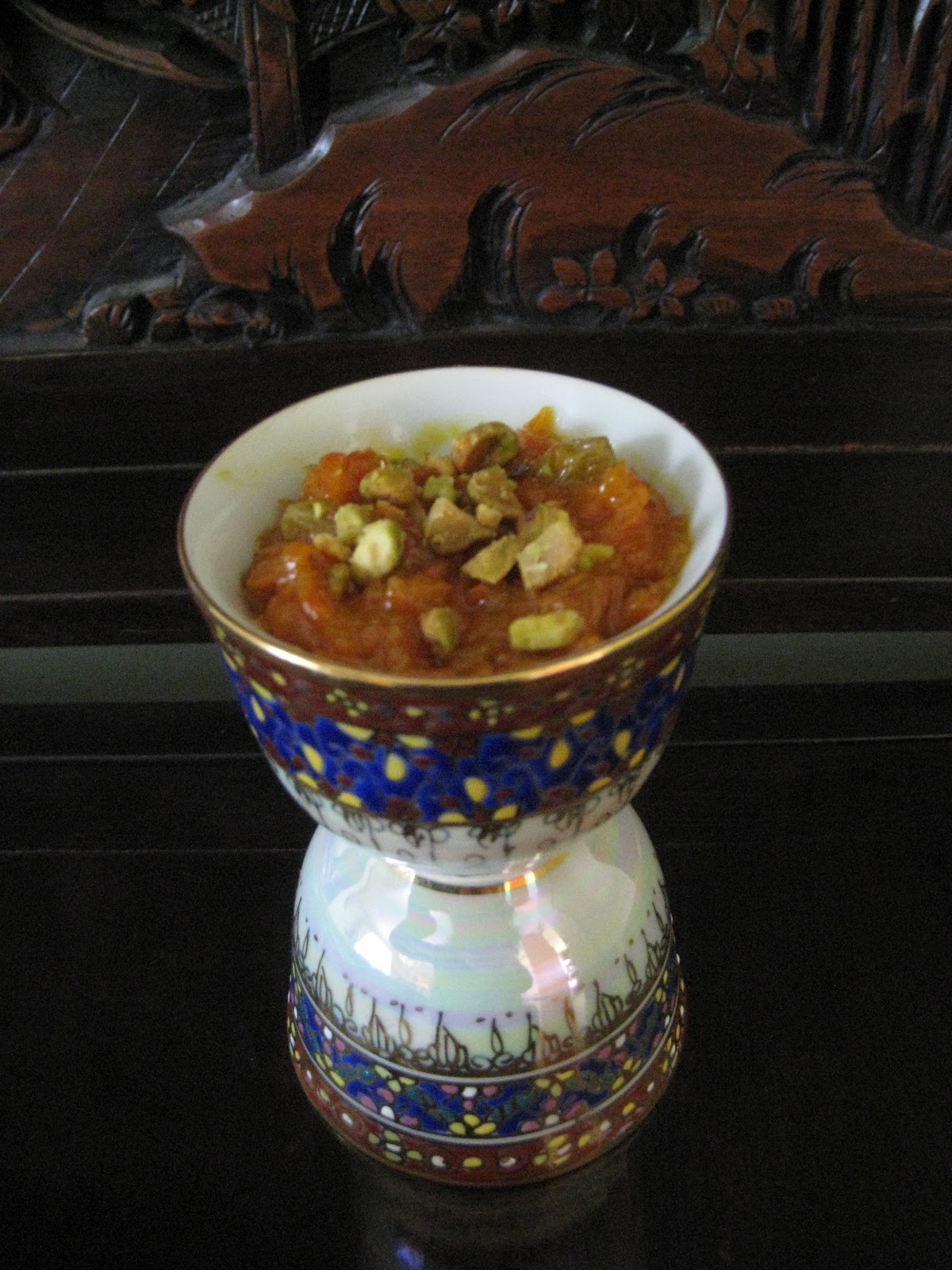
Indian Carrot Pudding ~ Gajar Halvah


A very popular and traditional Indian dessert that is served on festivals- Halvah, which means sweet in arabic. Gajar halva is typically made with sautéing fresh carrots in ghee and cream, however this dessert is made with vegan butter and coconut milk, reducing the calories and making it dairy free. Carrots are naturally sweet and have been used for thousands of years along the Silk Route, as a sweetener is desserts in lieu of sugar. This halva is adorned with chopped pistachios and jeweled raisins with just a hint of cardamom. A little of this densely decadent pudding goes a long way, since it is so rich and flavorful. Can be served warm or cold with a dollop of ice cream after a spicy meal.


Serves 6

Ingredients


¼ cup vegan butter
6 medium carrots, shredded
2 cups coconut milk
¼ cup packed brown sugar
¼ cup golden raisins
4 cardamom pods, bruised
¼ teaspoon salt
¼ cup unsalted pistachios, crushed (garnish)


Instructions

                      1      Melt butter in a skillet and then add carrots. Reduce heat to medium low and coat carrots in butter.
                      2      Stir in the coconut milk and simmer uncovered on low heat for 45 minutes; stirring occasionally.
                      3      Stir in the brown sugar, raisins, cardamom, and salt. Stir constantly until all the sugar is dissolved into a pudding like consistency; about 15 minutes.
                     4      Wait until slightly cool to transfer to small dessert bowls. Store in the fridge and when ready to serve, invert onto a dessert plate and garnish with pistachios.


Monday, January 30, 2012

Banana Coconut 5 Spice Muffins


With winter upon us, it's easy to picture oneself on a tropical island, under the shade of a coconut palm. But even if the mercury does eventually head north, a taste of the tropics remains as close as these bite size banana coconut muffins laced with Chinese 5 Spice. Quick to throw together and under 30 minutes to bake, these individually sized muffins will dreamily take you to the sunny isles.


It might seem like an odd combination, but actually- banana, coconut and Chinese 5 Spice all originate from the Southeastern part of Asia. Marrying them together into these intoxicatingly sweet and nutty morsels made sense.


In Sanskrit (ancient Hindu language), the coconut is viewed as the kalpa vriksha ("the tree which provides all the necessities of life"). Virtually every part of the coconut palm can be utilized in some manner. Such is the case with these muffins- the coconut milk is used in place of regular milk;  coconut oil for baking;  and the white coconut meat is used as a confection. It's wonderful when you can create something that utilizes all parts of a plant, and nothing goes to waste.


Chinese 5 Spice was originally used to make perfumes, but now is used in avant garde savory desserts. The formula is based on the Chinese philosophy of balancing the yin and yang in foods. The most common combination in 5 Spice is bajiao (star anise), clovescinnamonhuajiao (Sichuan pepper) and ground fennel seeds.


To finish off the muffins I sprinkled them with coconut flakes, because I love the crunchy texture it gives to baked goods.  The coconut flavor permeated the entire muffin and gave a subtle sweet note that you don't normally find in a banana muffin, while the 5 spice gave them a warmth, and the bananas themselves allowed the muffins to be nice and moist. 


Makes 14

Ingredients
2/3 cup organic coconut milk 
1 tablespoon fresh lime juice 
2 1/2 All Purpose Gluten Free Flour 
1/2 cup toasted unsweetened finely shredded coconut
1 teaspoon 5 spice Asian powder 
1 teaspoon baking powder 
3/4 teaspoon salt 
1/2 teaspoon baking soda 
1/2 cup coconut oil, warmed slightly so liquified 
2/3 cup packed brown sugar 
1 tablespoon pure vanilla extract 
2 large organic eggs 
3 very ripe medium bananas, mashed well 


Instructions
  1. Put oven rack in middle position and preheat oven to 350ºF.
  2. Line 14 muffin tins with paper liners.
  3. Whisk together flour, shredded coconut, spices, baking powder, salt, and baking soda in a bowl.
  4. Whisk together coconut oil and sugar until well combined, then whisk in vanilla, eggs and then bananas until well blended.
  5. Whisk in coconut milk and lime juice, then the flour until just combined.
  6. Drop batter into prepared muffin pan until each has an equal amount, and sprinkle with coconut flakes. Bake muffins until a wooden pick or skewer inserted in center comes out clean, and they are lightly brown about 20-25 minutes. Cool on wire racks.

Tuesday, January 10, 2012

Peach and Raspberry Crumble


Call back the summer with an old fashioned summer dessert that relies on seasonal fruits for most of its flavors. While peach and raspberry are not in season now, I actually froze them during the summer when I had an overflow of these juicy fruits.

In my cookbook that I am in process of editing, I write about the importance of seasonal eating, but I also write about how you can capture the bounty and freeze it into a time capsule for later use.

Freezing is one of the easiest, most convenient and least time consuming ways to store fruits of the season. The extreme cold slows down the changes that affect quality or cause spoilage. Freezing fruits is ideal when you will be using it for a dessert, because the texture changes and becomes softer- better for cooking than eating thawed fruits.


These little fruit jewels naturally contain a high amount of fiber, but a crumble topping with nuts add a sprinkling of whole grains and protein. The smattering of raspberries adds a bit of color and tartness to the peaches. If you don’t care for tart then use blueberries in lieu of raspberries. Serve with vanilla ice cream or yoghurt garnished with a spring of mint for added freshness.


Serves 6

Ingredients
¾ cup brown rice flour
4 tablespoons vegan butter
½ cup buckwheat flakes (or millet flakes)
¼ cup almond meal
¼ cup plus 2 tablespoons brown sugar
1-teaspoon ground cinnamon
3 fresh peaches, peeled, pitted and cubed
1-1/3 cup raspberries
4 tablespoon orange juice
2 tablespoons tapioca starch


Instructions

  1      Preheat oven to 350°F. Grease a 9-inch pie dish
    2   In a medium size bowl, place the rice flour and rub in the butter with your fingertips until the mixture resembles breadcrumbs. Stir in the buckwheat flakes, almond meal, ¼ cup sugar and cinnamon. Mix well.
    3      In the pie dish, combine the peaches, raspberries, orange juice, 2- tablespoons sugar and tapioca starch together. Sprinkle the crumble over the top, pressing it down lightly.

    4      Bake for 40 minutes or until the crumble is lightly browned. Serve warm or cold paired with your favorite ice cream. 


Related Posts Plugin for WordPress, Blogger...